
Illustrations at Scale. No Agency Required.
Turning a costly external dependency into a scalable, AI-powered visual system.
Built to generate. Designed to stay consistent.
Client:
Saxo Bank
Role:
Date:
2026

Overview
Saxo's content platform publishes dozens of articles weekly across trading categories - Forex, Equities, Options, Personal Finance, and more. Each article needed a hero illustration. The existing solution was an external agency. It was slow, expensive, and couldn't keep pace with content growth. More critically, it hadn't produced a system - just a growing collection of assets with no shared visual logic. Replacing the vendor wasn't the answer. The problem needed infrastructure.
The Problem
The agency delivered 32 objects across 5 color themes and 6 different formats. On paper, that sounds like coverage. In practice, it was a collection held together by a color palette and nothing else.
Style varied object to object. Rendering approach, line weight, and depth were inconsistent across the set. The only connective tissue was color - and color alone isn't a visual language.

The format chaos compounded it. Six sizes created unnecessary work on every publish, and none mapped cleanly to the article template's hero slot. But the structural problem ran deeper. The model required a new agency brief every time content grew - and content was growing by dozens of articles weekly. Turnaround was measured in months. That dependency wasn't sustainable regardless of output quality.
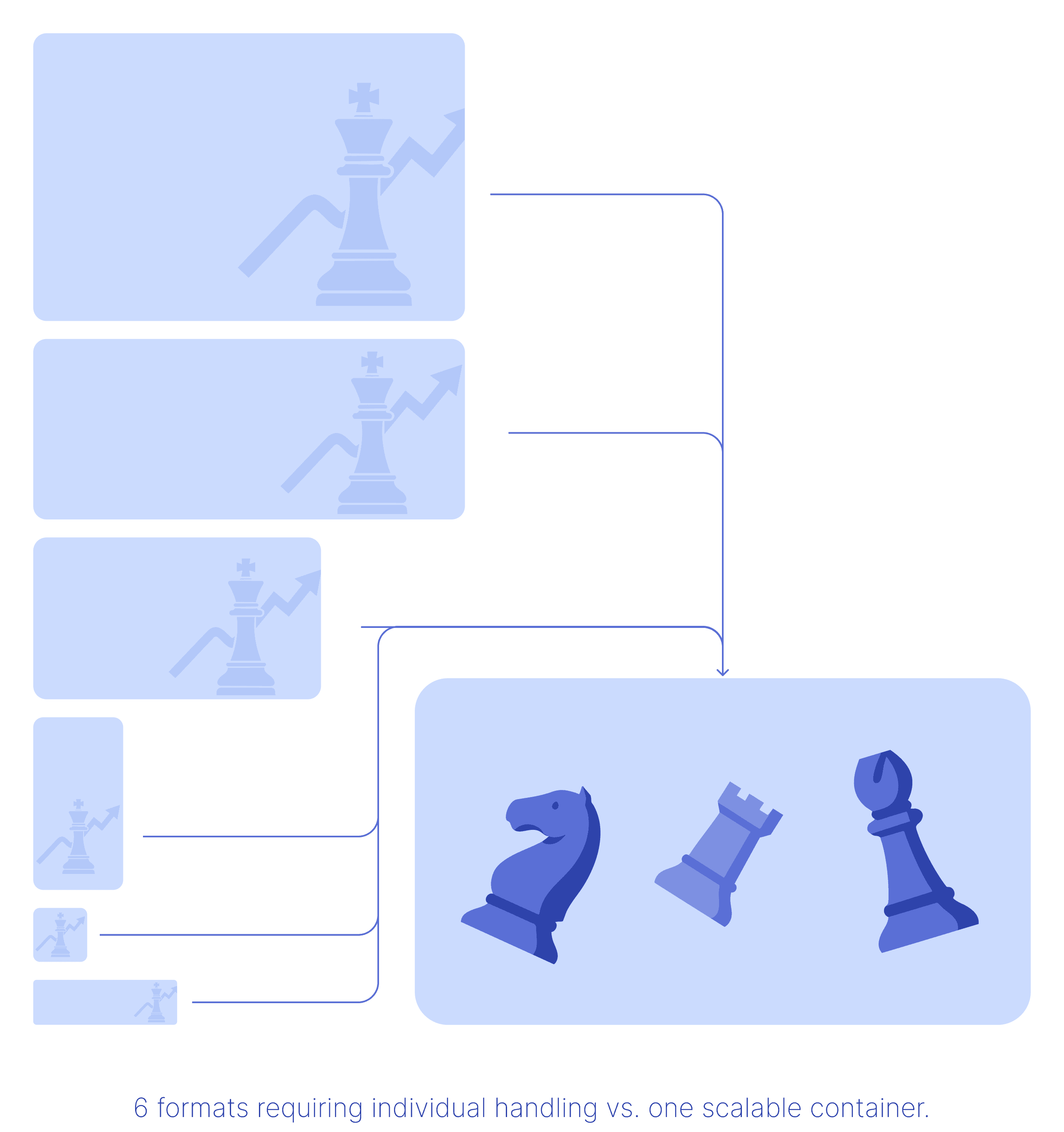
The bank was paying for assets. Nobody had built a system.
The Decision
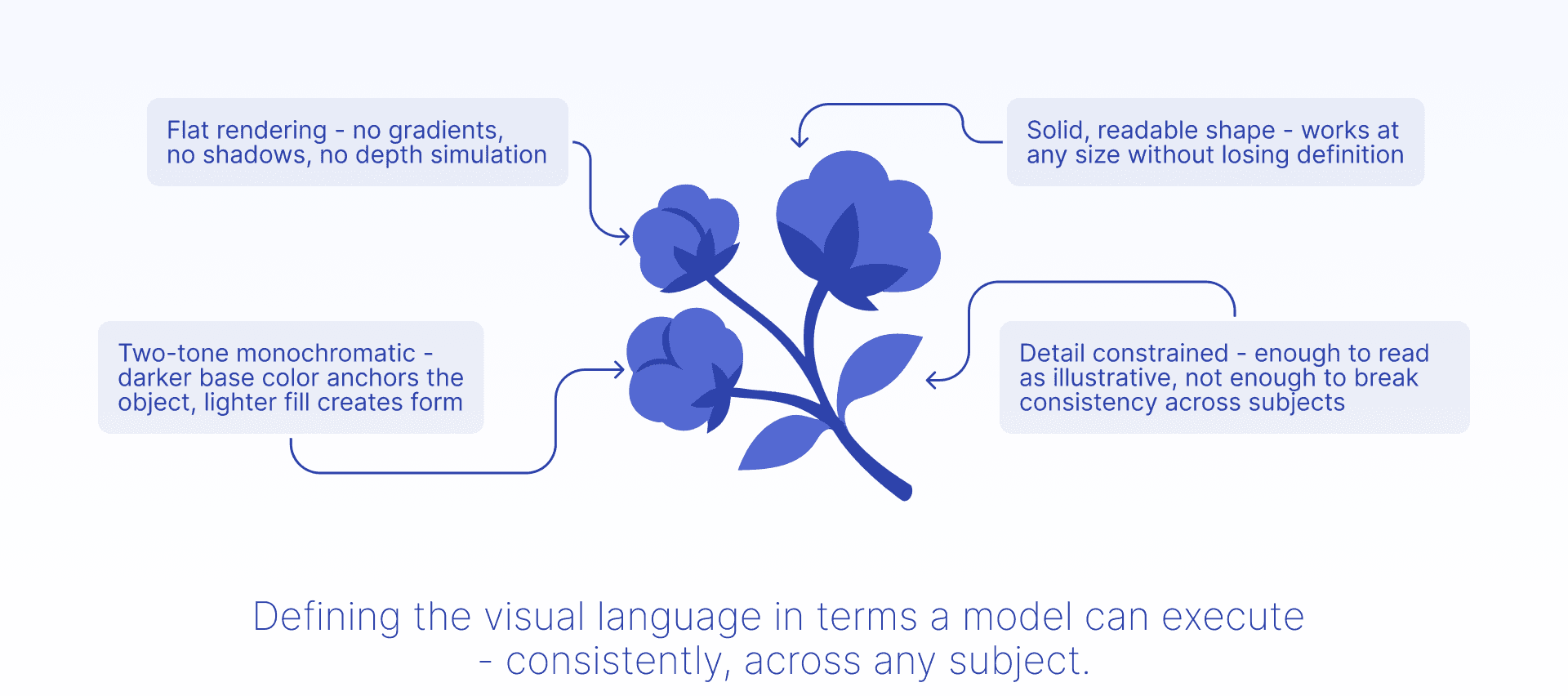
The goal wasn't better illustrations. It was a set of rules precise enough for a machine to execute consistently - without a brief, without a vendor, and without breaking brand.
That started with decomposition. Before any generation could happen, the visual language had to be defined in terms a model could act on: rendering style, depth layer, object weight, the relationship between illustration and background, the level of detail that preserved character without introducing inconsistency. Most of these are decisions designers make instinctively. Making them explicit and transferable was the actual design work.
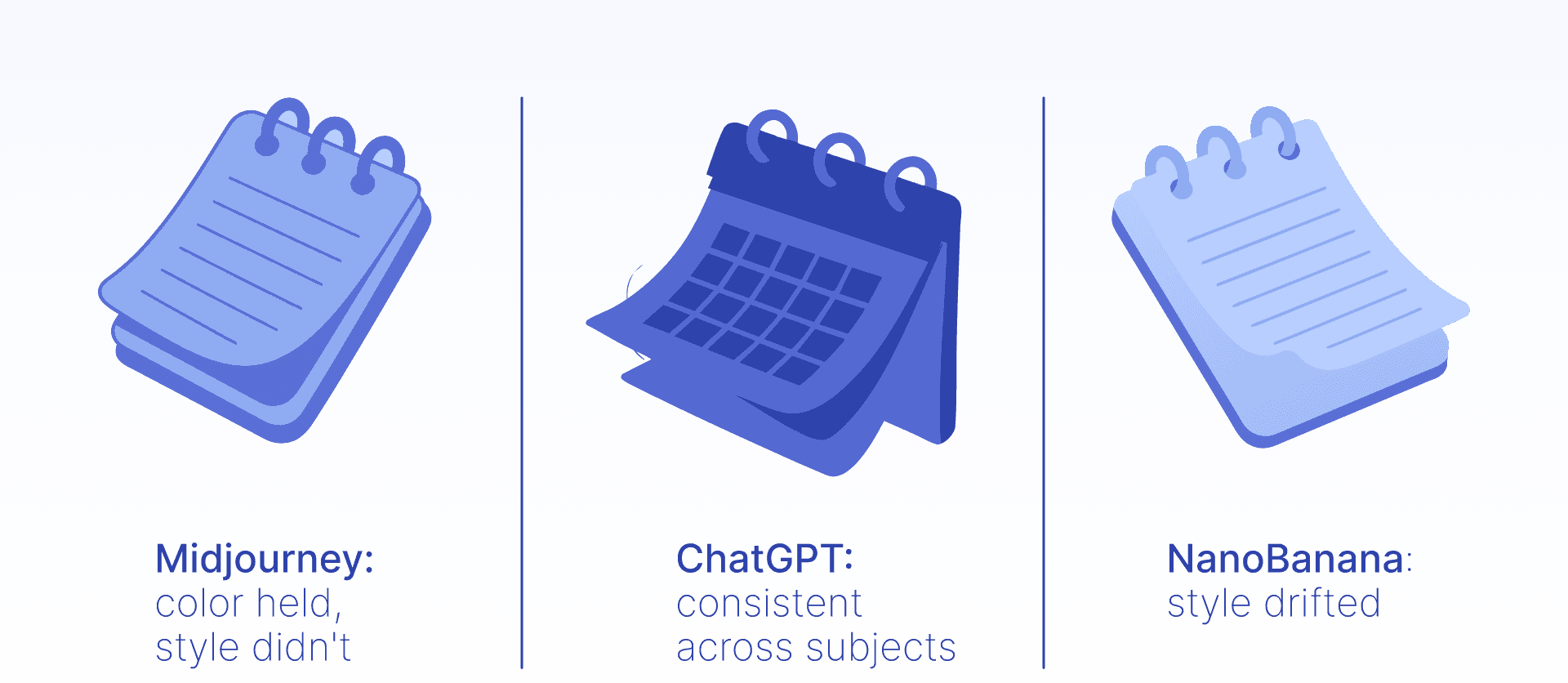
Model selection was part of the process. ChatGPT image generation, Midjourney, Nano Banana, and Gemini were all tested. Nano Banana and Gemini handled color replication well but couldn't maintain consistency across the full range of stylistic detail the system required. Midjourney drifted. ChatGPT image generation held the style most reliably across varied subjects - and reliability was the requirement.
Getting to consistent, usable output took multiple iterative rounds: generate, evaluate, adjust parameters, generate again. The prompt structure that emerged is proprietary to Saxo, but the principle it encodes is the system - one reference style that any subject can be run through and come out reading as the same family.
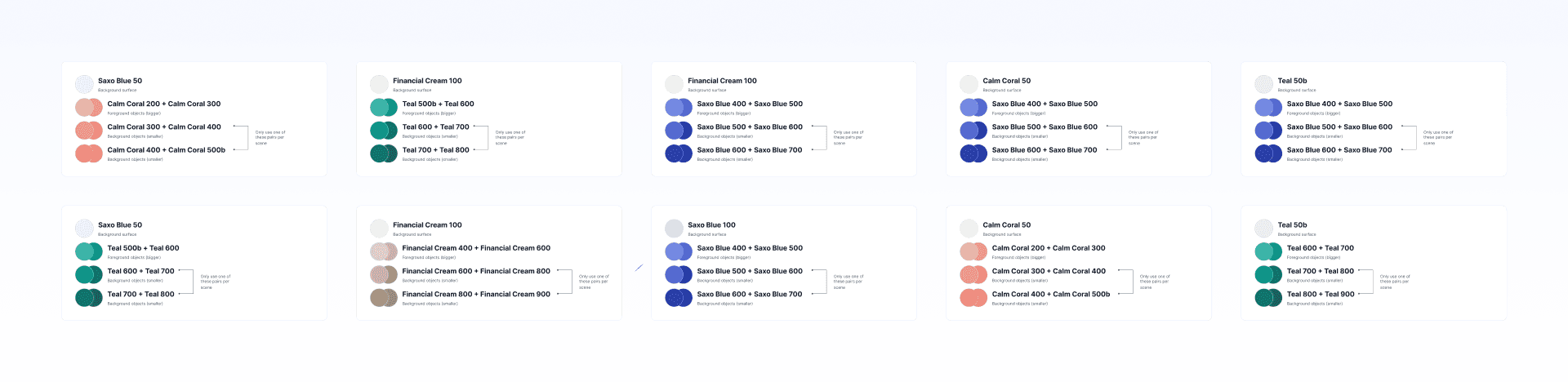
Color was formalised separately. Ten documented themes drawn directly from Saxo's CVI - named tokens, specific tonal pairings, tested across every background variant in the article template. Where the agency had five loosely defined colors, the system has a palette with rules.
Composition was deliberately kept human. The system generates objects. A designer - or eventually, any content creator - selects, arranges, and curates each hero within defined guidelines: object sizing relationships, positioning logic, the balance between a primary object and supporting elements. Full automation was a considered decision against. Human curation keeps the output organic. The guidelines keep it consistent. And because assets are generated as vectors, there's room for small adjustments without breaking the system.
The Outcome
One reference style. Thirty-two primary objects plus supporting elements. Ten color themes. Full coverage of 183 existing evergreen articles - with the system open for every article published after.
Where the agency needed months to deliver a batch, a single hero can now be generated and curated in minutes. The system moves at the pace the content operation actually requires.
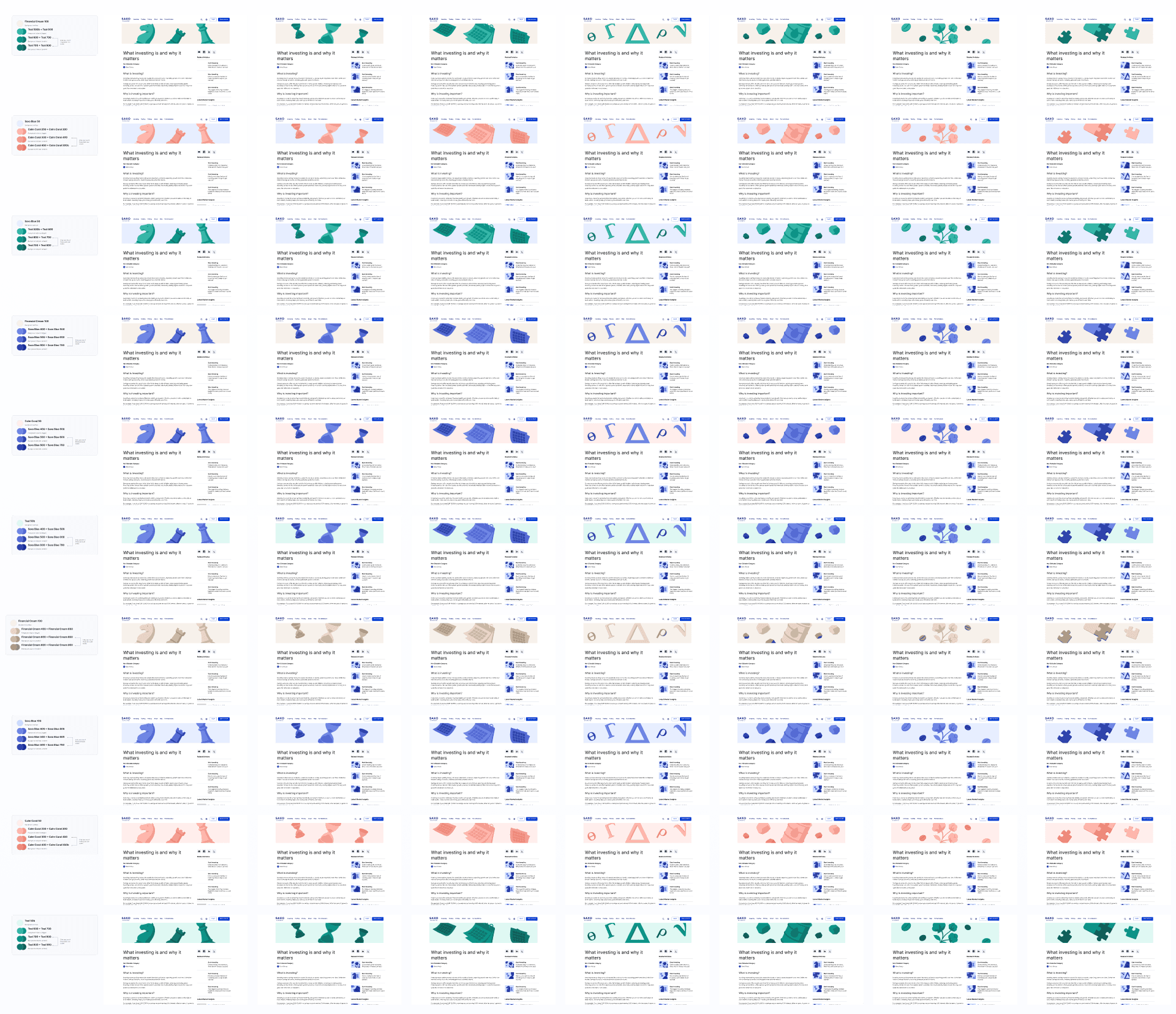
What the agency produced was a collection. What the system produces is infrastructure - replicable, extensible, and entirely internal. No brief. No vendor. No waiting.
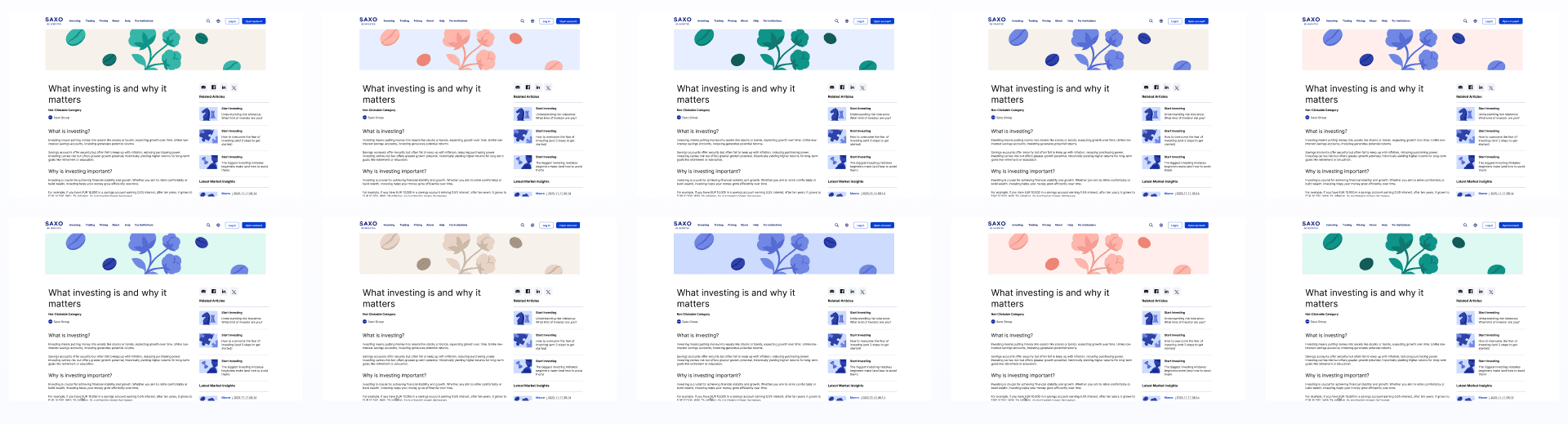
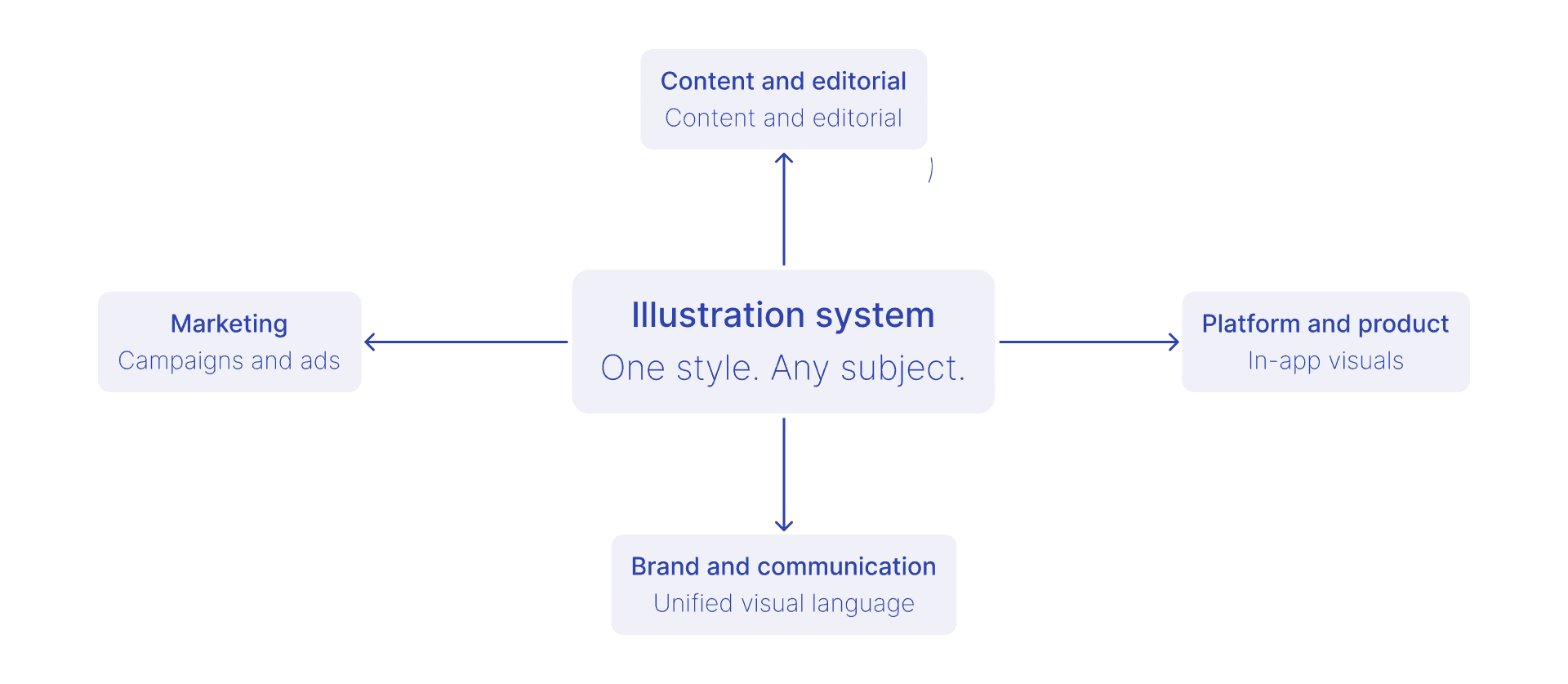
The recommendation is to extend it further: a Figma plugin that packages the prompt structure, color system, and composition guidelines into a single tool accessible to anyone creating content at Saxo - marketing, platform, editorial, beyond. The plugin doesn't replace design judgment. It distributes the output of it.
The Larger Signal
Saxo currently has no unified illustration language across the company. Visual assets vary by team, by brief, by vendor. The same architecture that solved the content layer problem could define a shared visual standard company-wide - not by centralising production, but by encoding the style so thoroughly that consistent output becomes the default regardless of who generates it.
That's the difference between a tool and a standard.
What This Unlocks
The system shifted the work from briefing a vendor to encoding a standard - moving visual production from an external dependency into something the organisation owns and controls.
183 articles covered. A style consistent enough to scale indefinitely. A process that takes minutes instead of months.
What started as a content fix is a company-wide standard waiting to ship.