
Designing for Operational Scale
Turning fragmented retail operations into structured and measurable systems.
Used by Nike, ASICS, and Flying Tiger.
Client:
Atobi
Role:
Product Design - Systems & Data
Date:
2023-2024
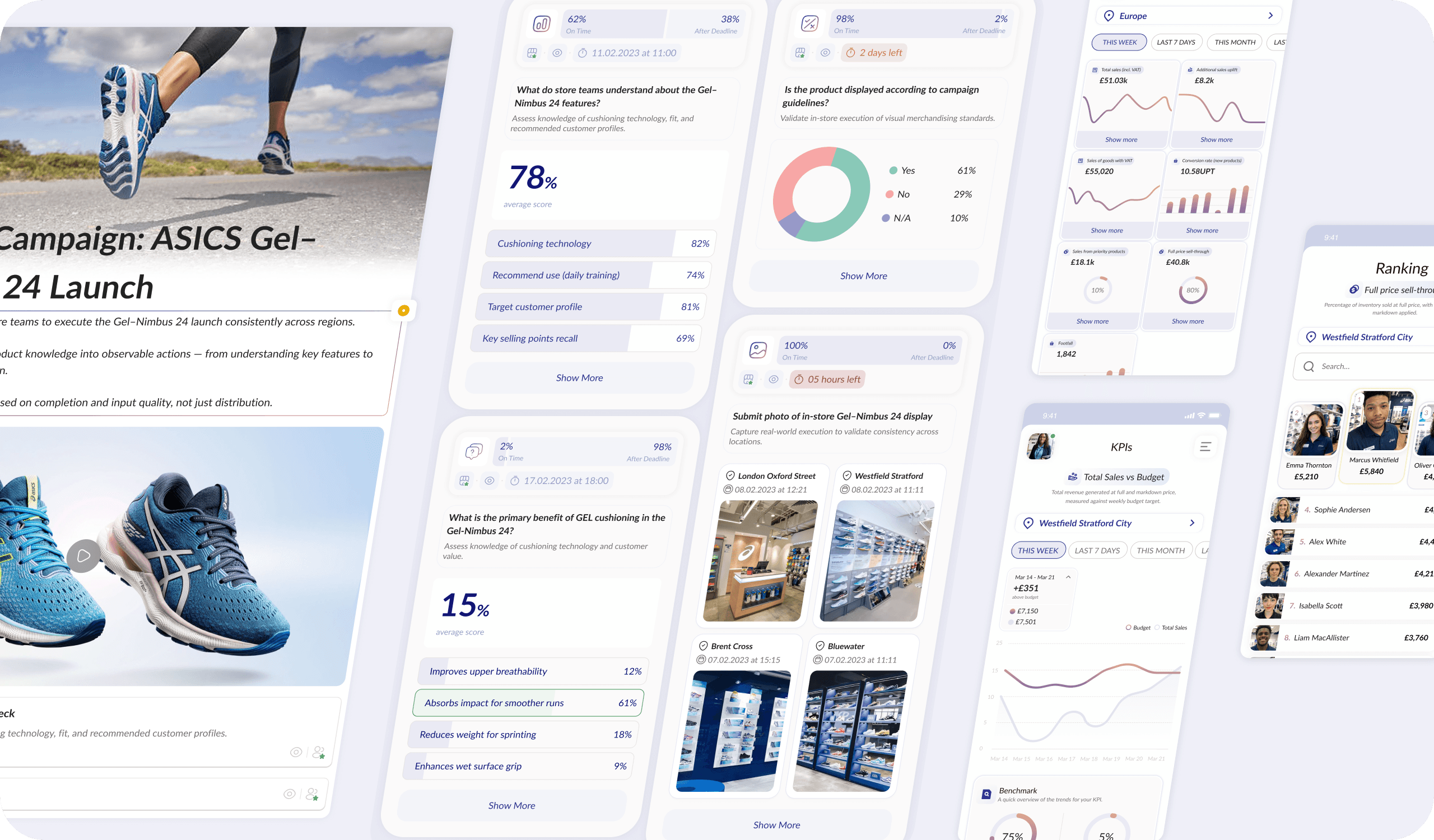
System Overview
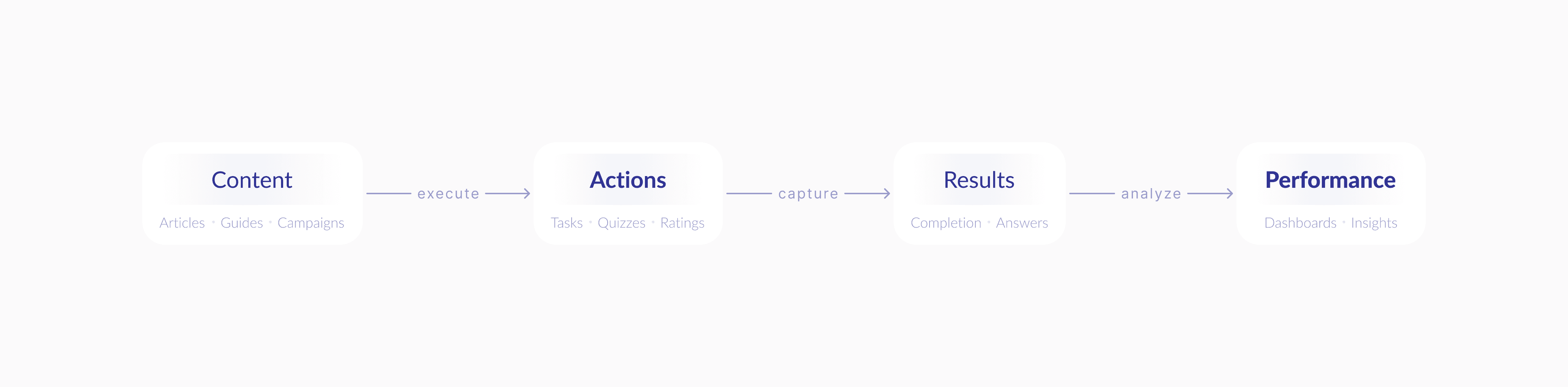
I designed a system that connects content creation with real-world execution and measurable outcomes.
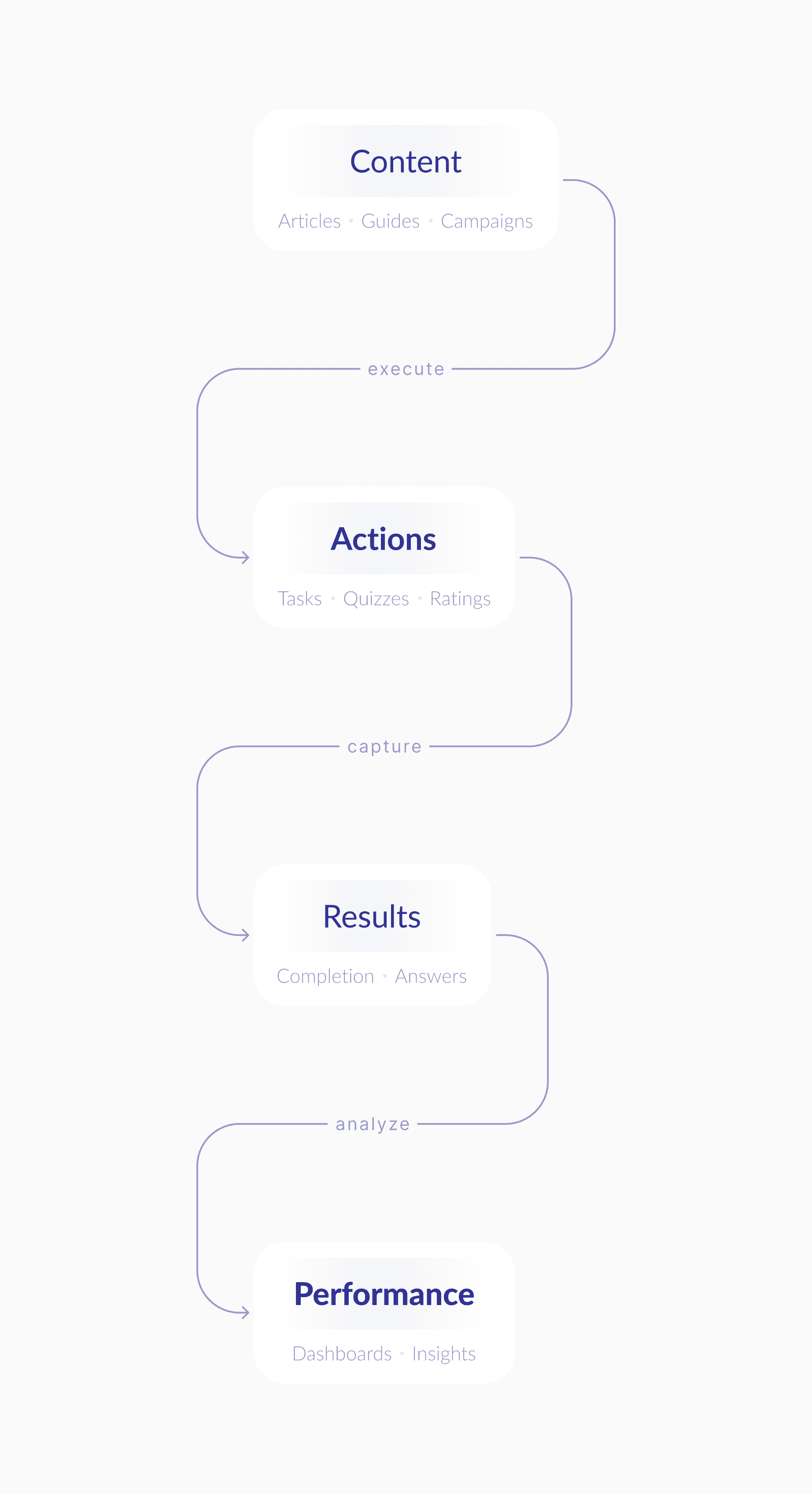
Content becomes actions.
Actions generate results.
Results inform performance.
Context
Atobi is used by global retail brands to distribute training, campaigns, and operational guidelines across stores.
Teams operate across multiple layers - regions, countries, and locations - with different roles and responsibilities.
Problem Statement

Approach
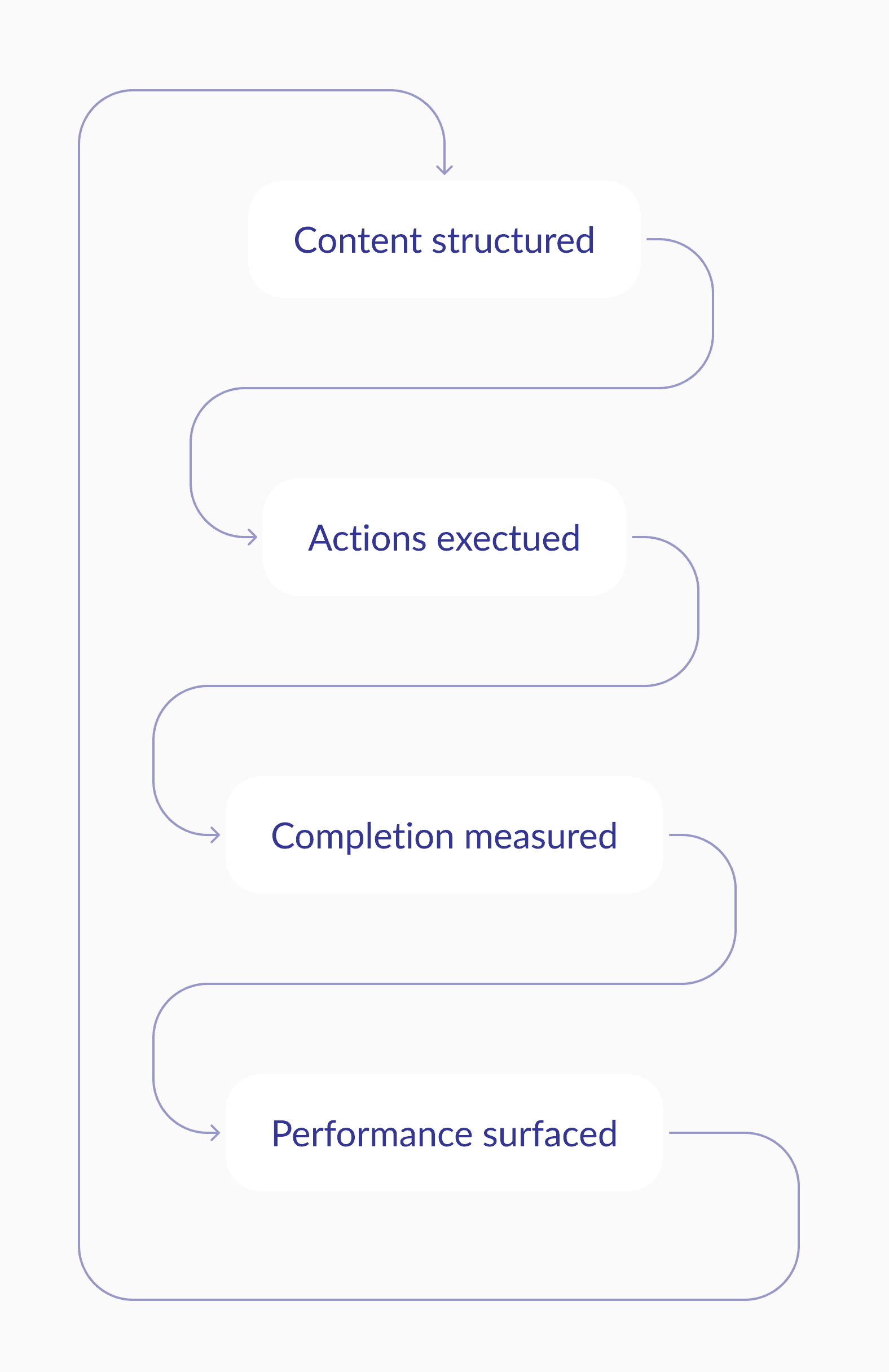
Rather than designing isolated features, I focused on defining the system based on these observed patterns:
how content is structured
how actions are executed
how completion is measured
how performance is surfaced

Key Decisions
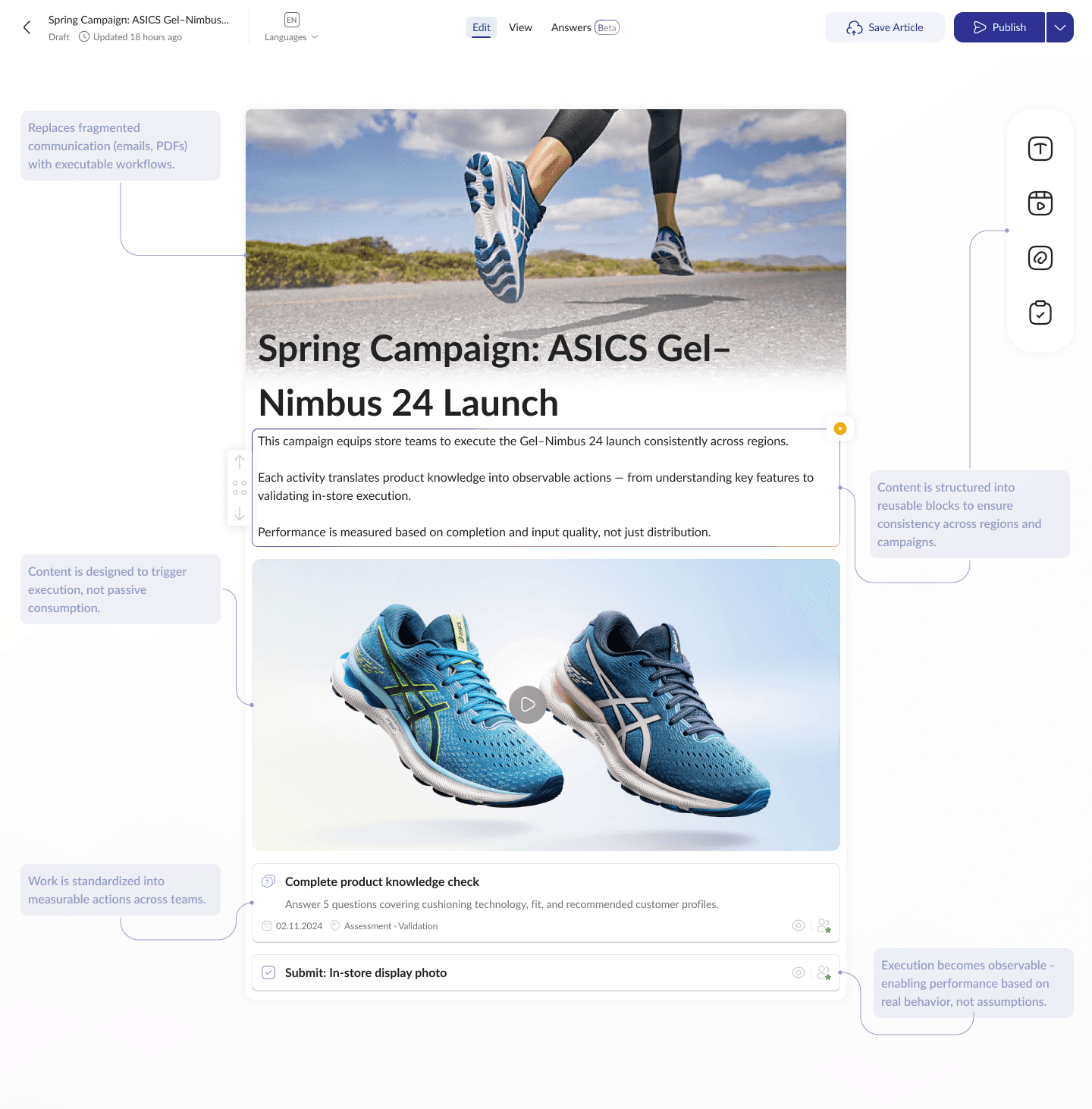
Structuring content into measurable blocks
Content needed to support training, campaigns, and operational guides - while remaining consistent across teams.
Trade-off
Flexibility vs. structure.
Decision
Defined a set of reusable content blocks (media, tasks, quizzes, ratings) with a fixed logic and flexible sequencing.
Outcome
Content became consistent, composable, and measurable.
Defining completion logic
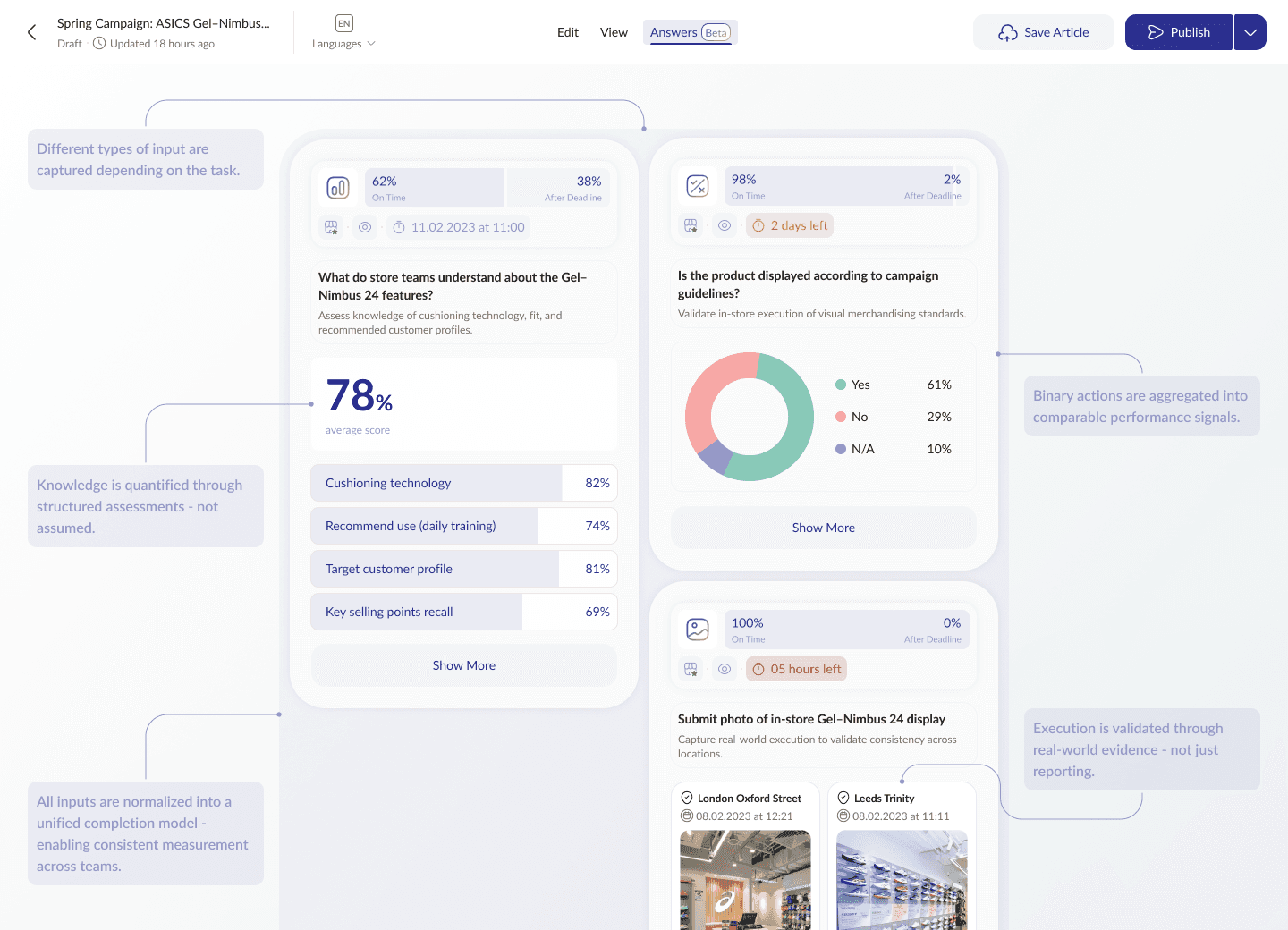
Execution required a clear definition of what “done” means.
Challenge
Opening content ≠ completing an action.
Decision
Standardized completion across action types and unified scoring (yes/no, ratings, numeric), while enabling more complex quiz logic.
Outcome
Execution became comparable across roles and locations.
Designing hierarchy-aware access
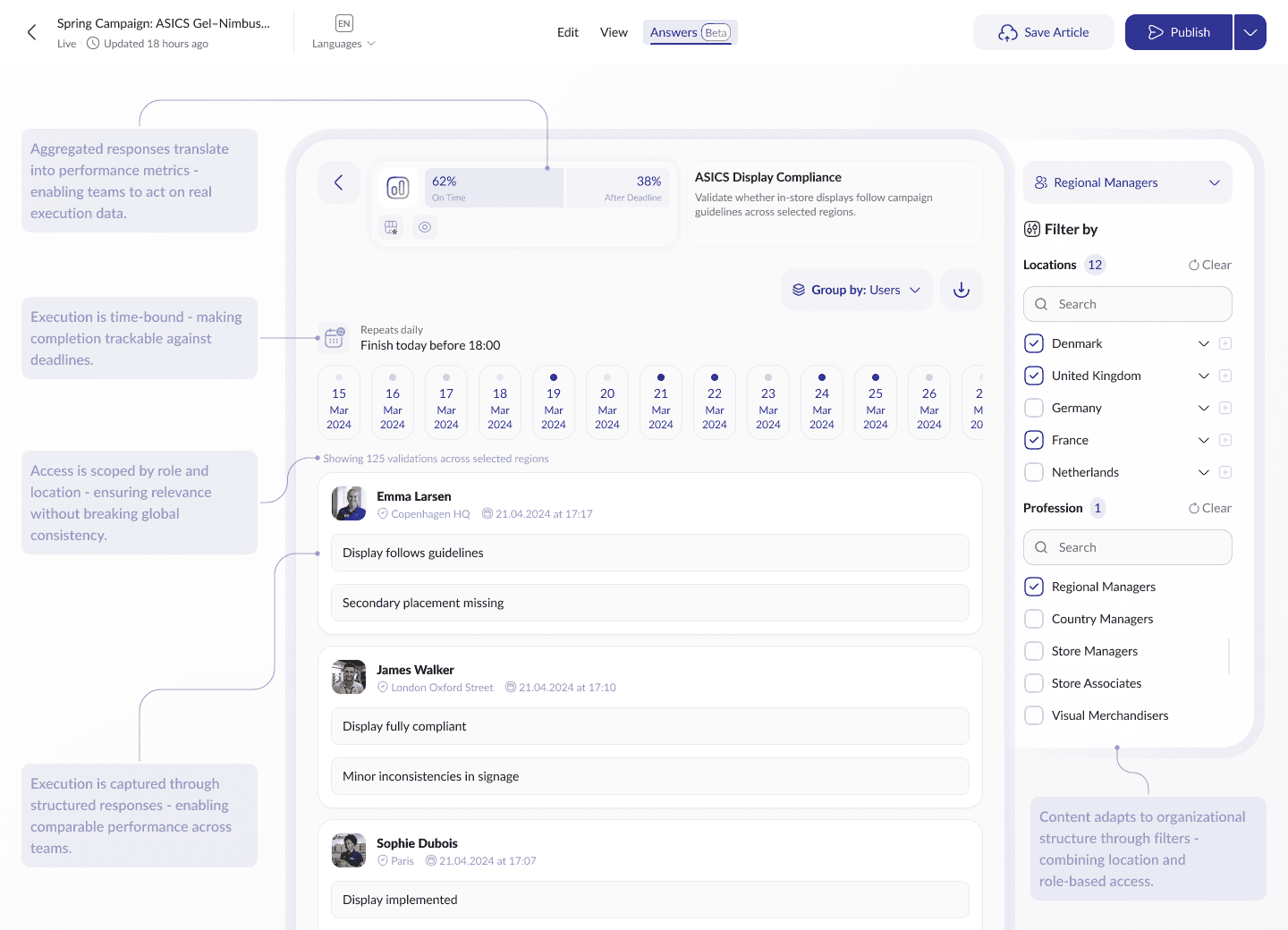
Retail organizations operate across inconsistent and often incompatible hierarchies - a recurring challenge across clients.
Challenge
Different structures, shared products, different permissions.
Decision
Introduced an audience model combining roles (e.g. managers, employees) and locations (region, country, store), supported by filtering and permissions.
Outcome
Information became relevant at every level without breaking global consistency.
Making execution visible
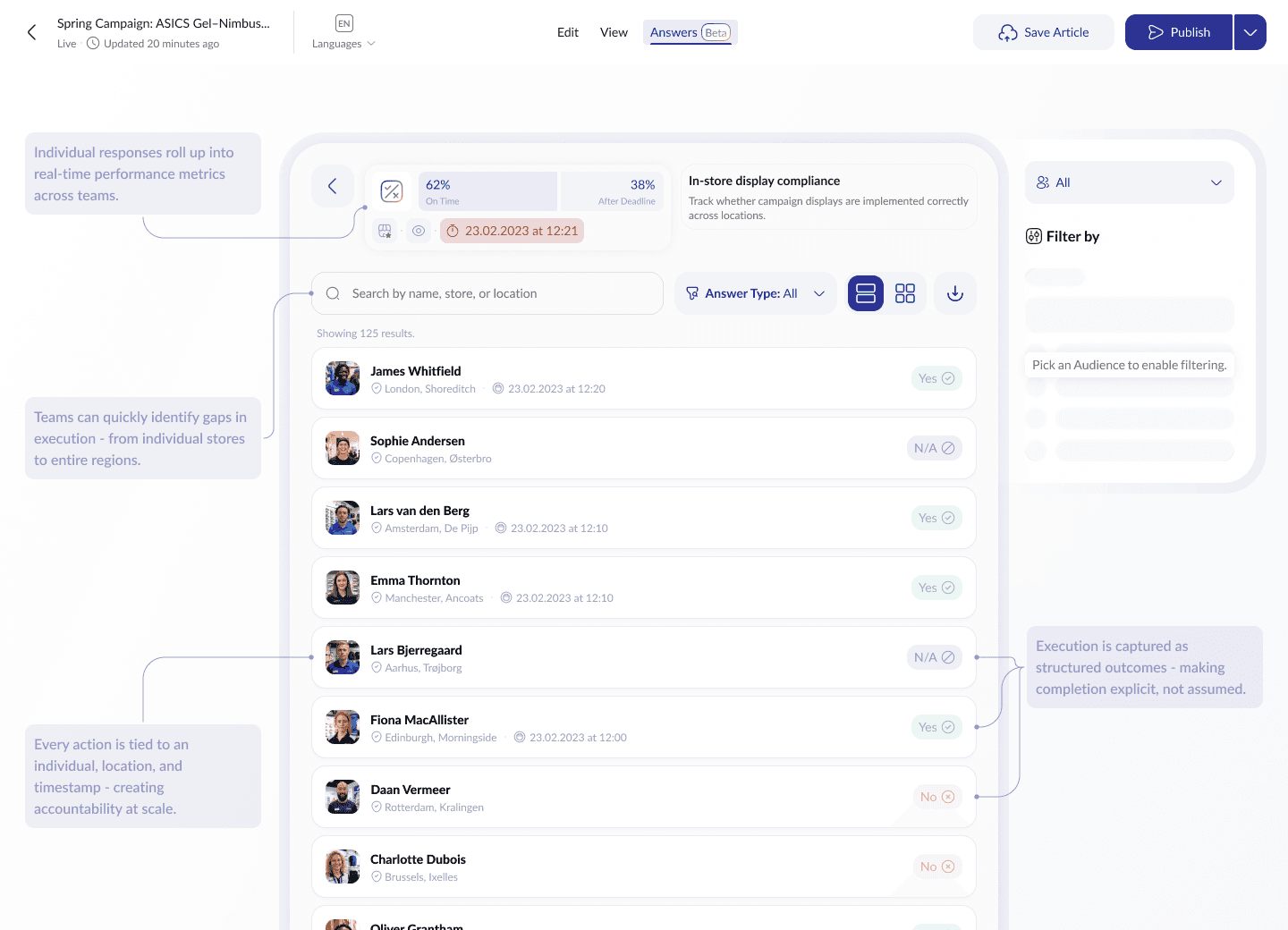
Before, performance was inferred from financial results - a limitation consistently highlighted by stakeholders.
Decision
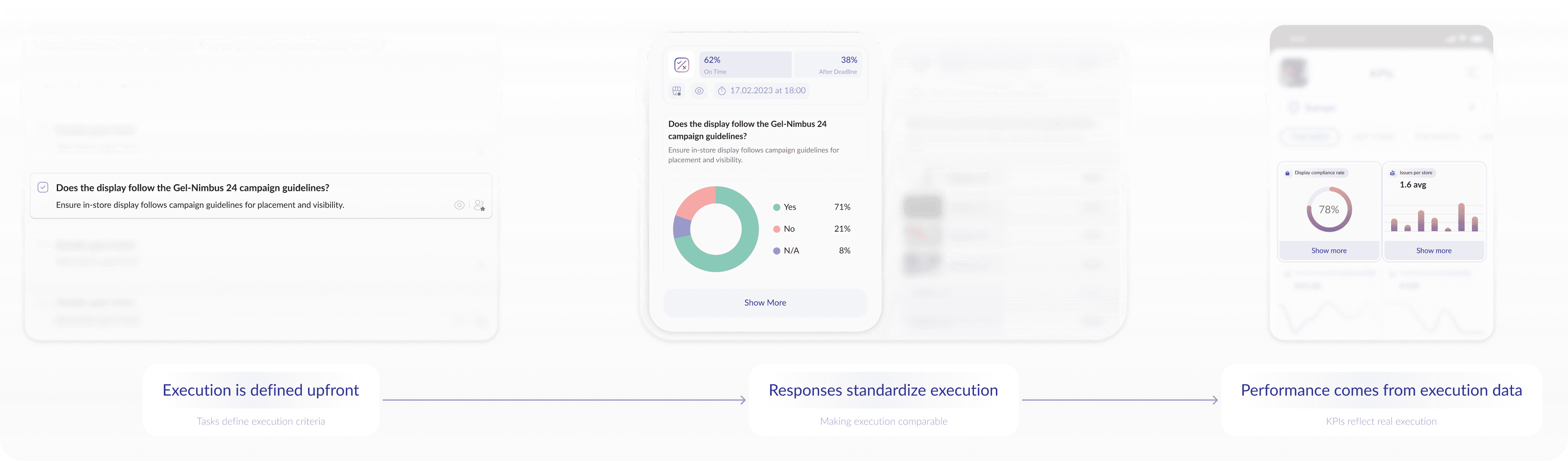
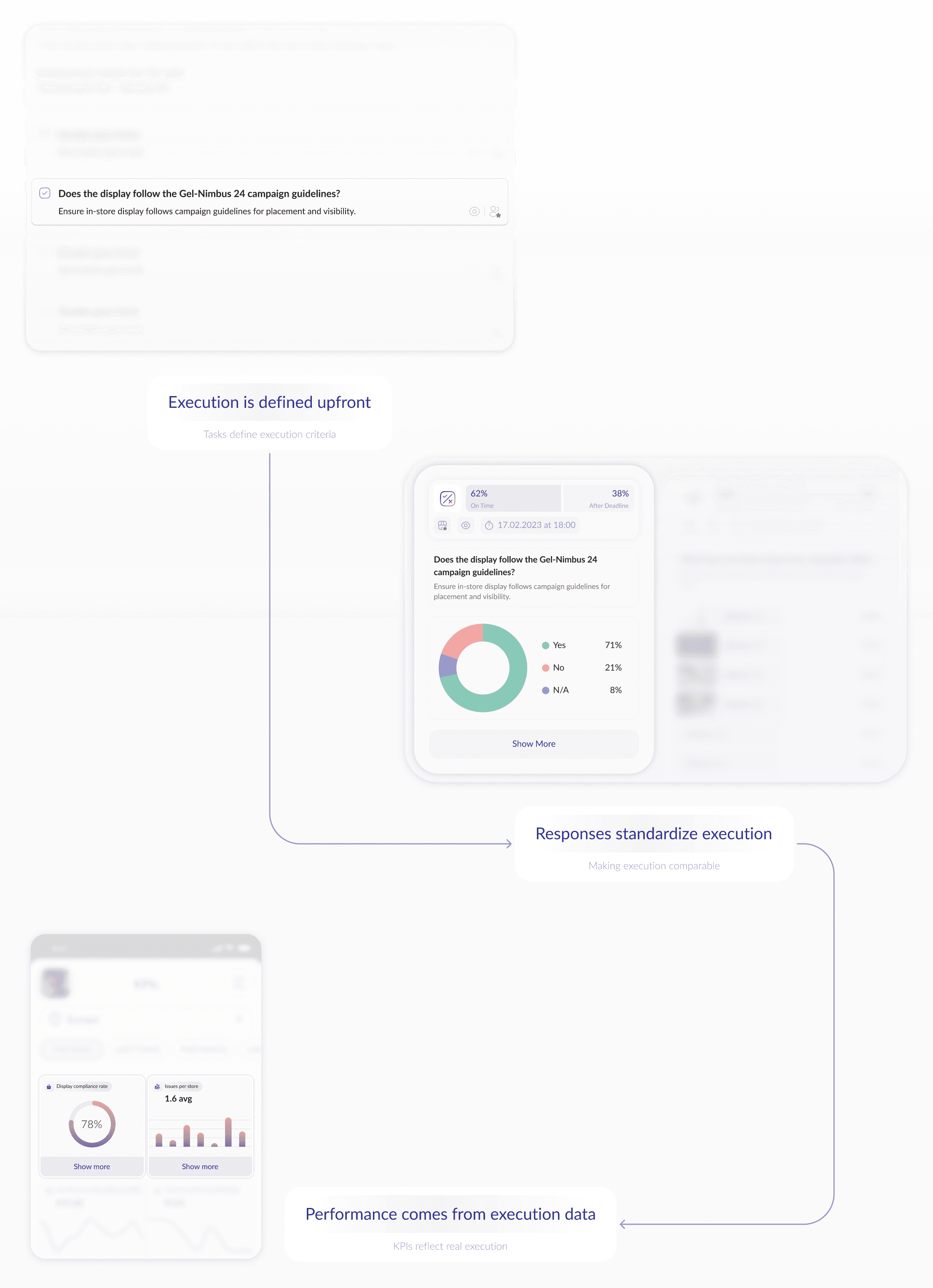
Designed completion tracking and answer aggregation - showing who completed actions, who didn’t, and how results vary across teams.
Outcome
Teams could act on behavior, not assumptions.
System in Action
Content is structured, executed as actions, and surfaced as performance.
The system connects what is communicated with what actually happens in stores.
From Distribution to Execution
Before
After
Content structured as actions
Execution untracked
Execution tracked across teams
Performance = financial outcomes
Performance includes behavioral data
No visibility into completion
Clear visibility into who did what, and when
Fragmented tools
One connected system
Impact
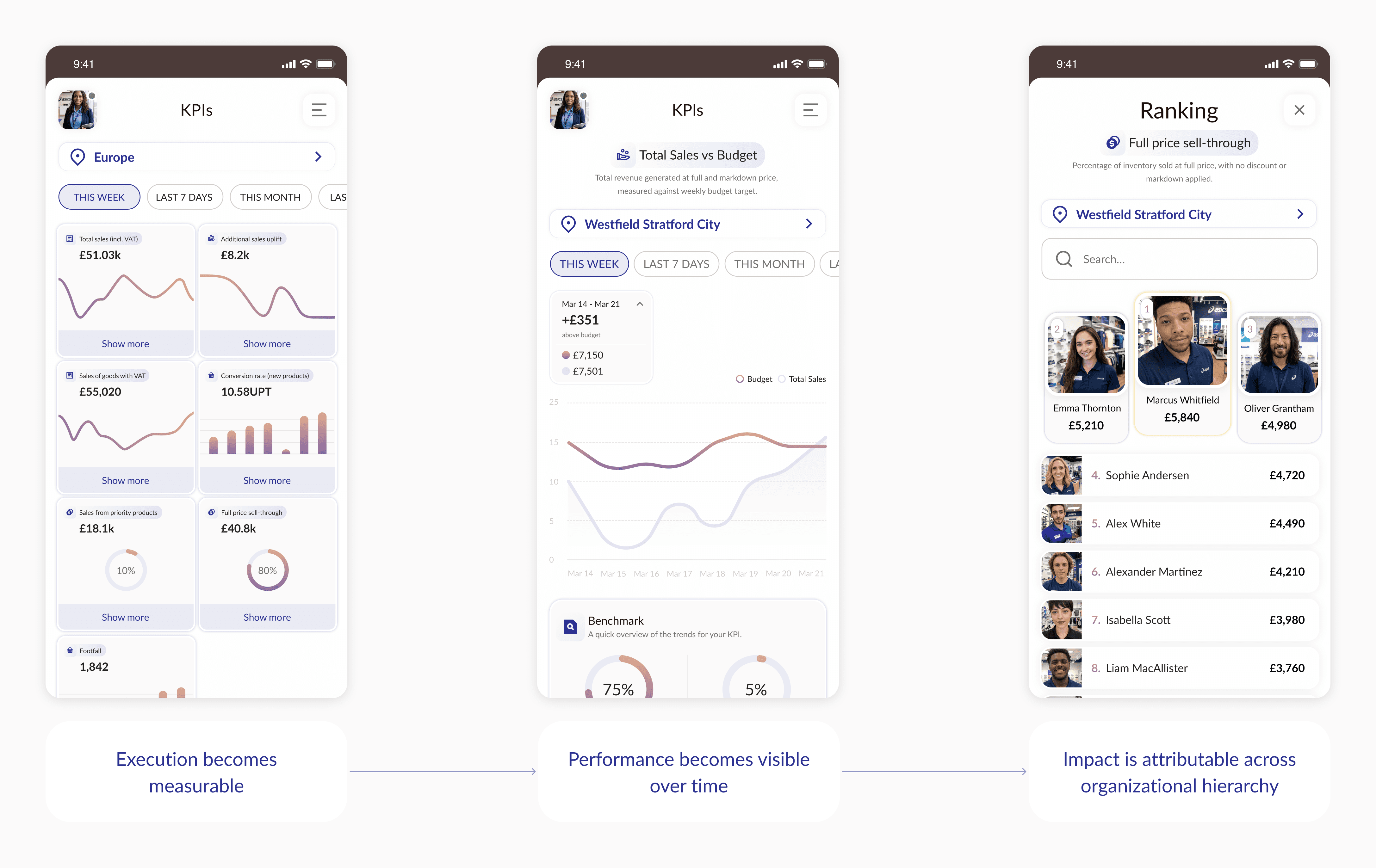
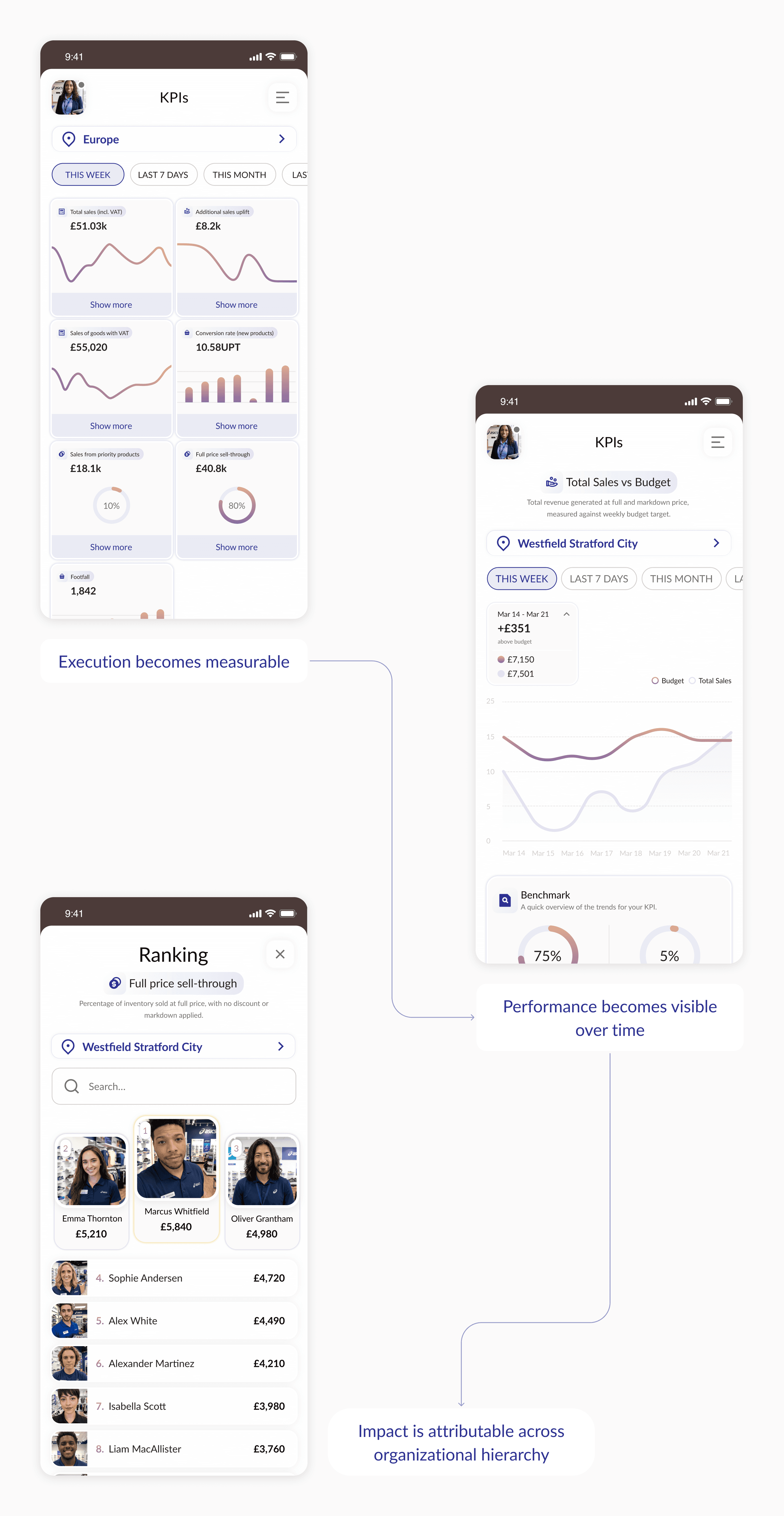
The system shifted retail operations from content distribution to measurable execution.
What this enabled
Identify underperforming stores and teams
Compare execution across regions and roles
Understand how content translates into behavior
Follow up based on actual performance
Shift in Thinking
The system shifted teams from reporting outcomes to understanding behavior - enabling decisions based on execution, not assumptions.